
Across North America, construction companies are facing a persistent challenge: a growing shortage of skilled labor. From residential housing to major infrastructure projects, contractors are struggling to find enough workers to maintain the pace of development.
As cities continue to expand and governments increase infrastructure investment, the demand for construction projects has surged. However, the available workforce has not grown at the same rate. The result is a widening gap between project demand and labor capacity, forcing companies to rethink how construction sites operate.
A Growing Workforce Gap
Industry forecasts show that the construction sector will require a significant number of additional workers in the coming years to keep up with demand.
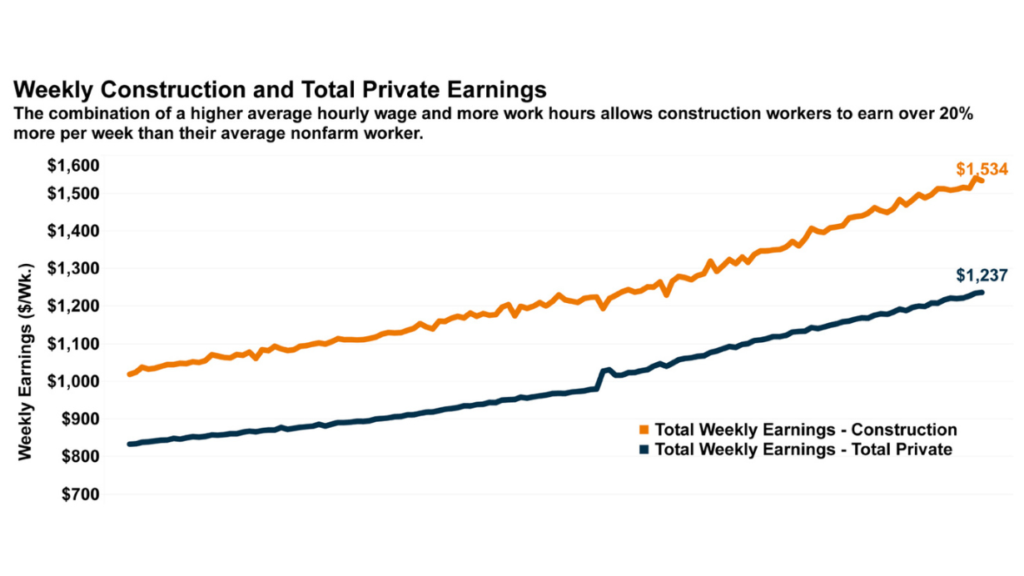
| Region | Estimated Worker Shortage |
| United States | ~500,000 workers needed annually |
| Canada | ~85,000 workers needed by 2033 |
| North America | Significant ongoing labor gap |
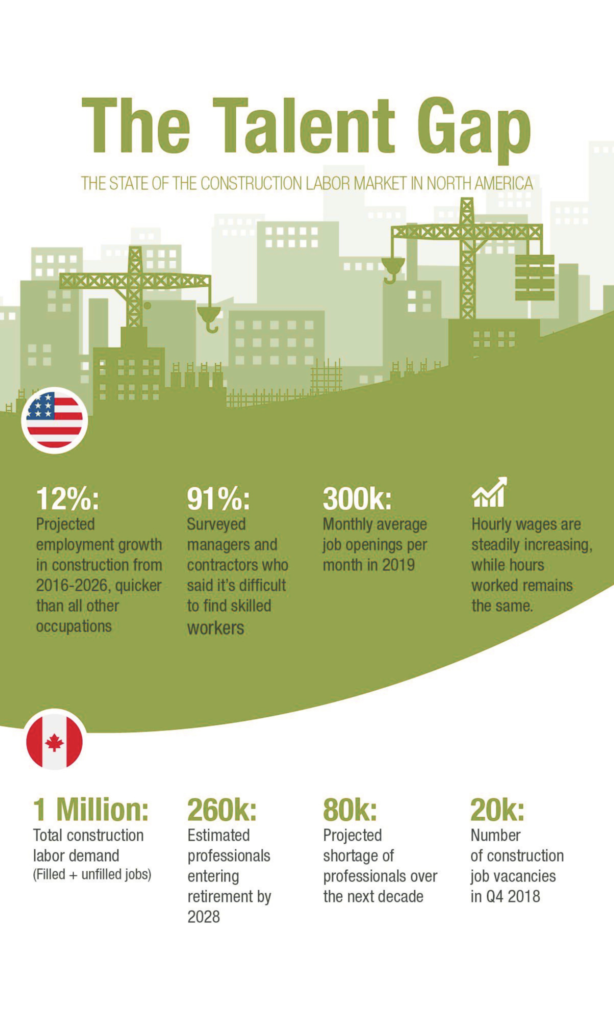
Several factors are contributing to this shortage:
- An aging workforce approaching retirement
- Fewer younger workers entering skilled trades
- Rapid urban expansion and housing demand
- Increased public infrastructure investment
With fewer workers available, construction companies are being forced to manage larger projects with smaller teams.
Project Delays and Operational Pressure
Labor shortages are affecting construction timelines across the continent. Projects that once required large teams now operate with fewer supervisors, fewer site managers, and reduced oversight capacity.
| Impact Area | Result |
| Project Timelines | Longer completion periods |
| Workforce Availability | Smaller on-site teams |
| Coordination | Increased operational complexity |
| Site Oversight | Reduced supervisory capacity |
For companies managing multiple job sites, these pressures create an additional layer of complexity. Supervisors are often responsible for several projects simultaneously, making it difficult to maintain visibility over daily site activities.
The Challenge of Managing Distributed Teams
Construction projects involve a wide range of teams working together, contractors, subcontractors, equipment operators, and site managers. On large projects, workers move between job sites while tools, vehicles, and other operational assets circulate across teams throughout the day.
Common operational activities include:
- distributing tools and equipment across crews
- coordinating access for subcontractors
- managing vehicles and heavy machinery
- securing valuable equipment and materials
When teams are spread across multiple locations, maintaining consistent oversight becomes difficult. Without structured systems, supervisors often rely on manual processes that slow down operations and reduce accountability.
The Shift Toward Centralized Site Management
To address workforce limitations, many construction firms are adopting centralized management systems that improve visibility across job sites.
Instead of relying on manual coordination between teams, centralized platforms allow managers to oversee access, assets, and operational activity from a single interface. This approach helps companies maintain control even when fewer supervisors are available on site.
Digital oversight tools are increasingly used to streamline routine operational tasks, reduce administrative work, and improve coordination across distributed teams.
Centralized Access and Asset Control
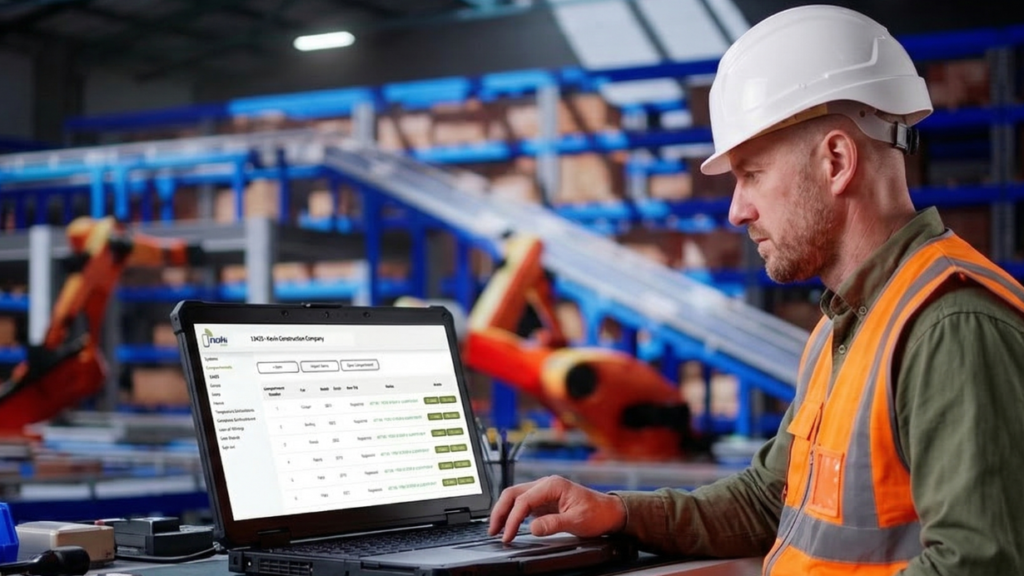
This shift toward centralized operations is where solutions such as NOKI Exec play an important role.
Rather than treating keys, equipment, and tools as separate management challenges, systems like NOKI Exec integrate them into a single platform. Authorized team members can securely access items when needed, while the system automatically records activity and maintains accountability across teams.
For construction companies managing multiple projects, centralized infrastructure provides several advantages:
- improved visibility across different job sites
- controlled access to operational items and equipment
- reduced reliance on manual supervision
- clearer accountability across crews and subcontractors
By combining access control and asset management within one system, companies can simplify daily workflows and maintain stronger oversight across distributed teams.
The Future of Construction Site Operations
Labor shortages are expected to remain a defining challenge for the construction industry over the coming decade. As projects grow larger and more complex, companies will need smarter ways to manage teams, equipment, and site operations.
Centralized systems that combine access management, asset control, and operational visibility will play an increasingly important role in addressing these challenges.
For construction firms operating across multiple locations, solutions like NOKI Exec represent a shift toward more efficient, connected job site management—helping teams stay organized, accountable, and productive even in an environment of limited workforce availability.