
Most condo key management problems don’t start with the keys residents carry. They start with the keys that leave the management office for a day, a week, or longer.
A plumber needs the mechanical room. A restoration crew needs a unit after a water loss. A cleaner needs the amenity floor. A realtor needs a vacant suite. Contractors, realtors and vendors are in your building more often than most residents realize, and they need access to the areas that matter most.
When those keys go out on a sign-out sheet or from a desk drawer, nobody can say with confidence who has which key right now. This post covers where informal key handling breaks down, what modern condo key management looks like in practice, and how property managers, developers and boards can establish an airtight access process.
Where Informal Condo Key Management Breaks Down
A sign-out sheet works until it doesn’t, and the failures tend to look the same from building to building.
- The key stays out longer than planned. A contractor signs out a key for a quick job and keeps it overnight, over a weekend, or until the next visit. Nobody is told it is late, because nobody is watching the clock.
- Copies go unnoticed. Once a key leaves the building, there is no way to know whether a copy was made. According to Canadian Condominium Institute (CCI) risk management best practices, unaccounted physical access creates substantial corporation liability, with emergency re-keying costs falling on the building’s operating budget.
- The record is incomplete. A paper log depends on handwriting, honesty and someone being at the desk. It shows what a person wrote down, not what actually happened.
- Access is wider than the job. A mechanical room key often opens more than the one door the contractor needs. A master key opens more still.
- Responsibility is unclear after an incident. If something goes missing from a unit or storage area, the first question is who had access and when. A paper log rarely answers it.
Who Needs Keys in a Condo Building, and What to Control
Different visitors need different access, and each group should have its own rules.
| VISITOR | TYPICAL ACCESS | WHAT TO CONTROL |
|---|---|---|
| Trades and repair contractors (plumbing, electrical, elevator, HVAC) | Mechanical and electrical rooms, roof access | Only the rooms the job requires, for the length of the job |
| Personal support workers (PSWs), dog walkers and other service providers | A single resident’s suite | One suite, agreed times, limited duration |
| Restoration and unit contractors | Individual suites after a loss or during repairs | One suite at a time, with a named person responsible |
| Cleaners and janitorial staff | Common areas, amenity rooms, garbage rooms | Recurring access on an agreed schedule |
| Realtors and showing agents | Vacant or listed suites | Access per showing, with a record of who went in |
| Developers and builder site staff | Deficiency work, unsold suites, turnover areas | Access by role during the turnover period |
| Inspectors, appraisers and insurers | Designated suite or common building areas | One visit, then access ends |
How a Controlled Key Handoff Works
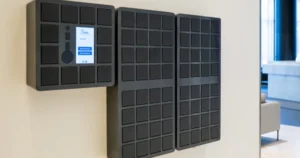
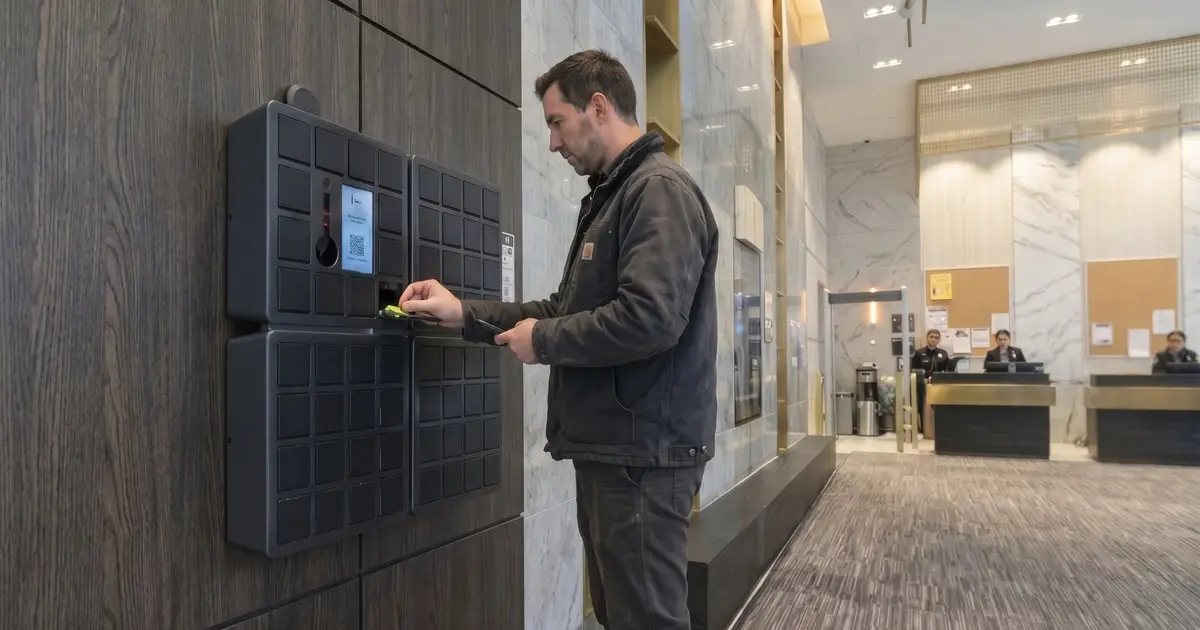
With Noki Exchange modular cabinets, the key stays in a locked compartment inside the building, and every handoff follows the same six steps, whoever the visitor is.
- Store. Keys are locked in assigned compartments.
- Authorize. Anyone with the app can grant others access to a key for specific dates and times. Authorized users receive a secure passcode to open the compartment.
- Release. Only authorized users can retrieve keys assigned to them.
- Return. The user enters the passcode to open the compartment and return the key when the work or showing is done.
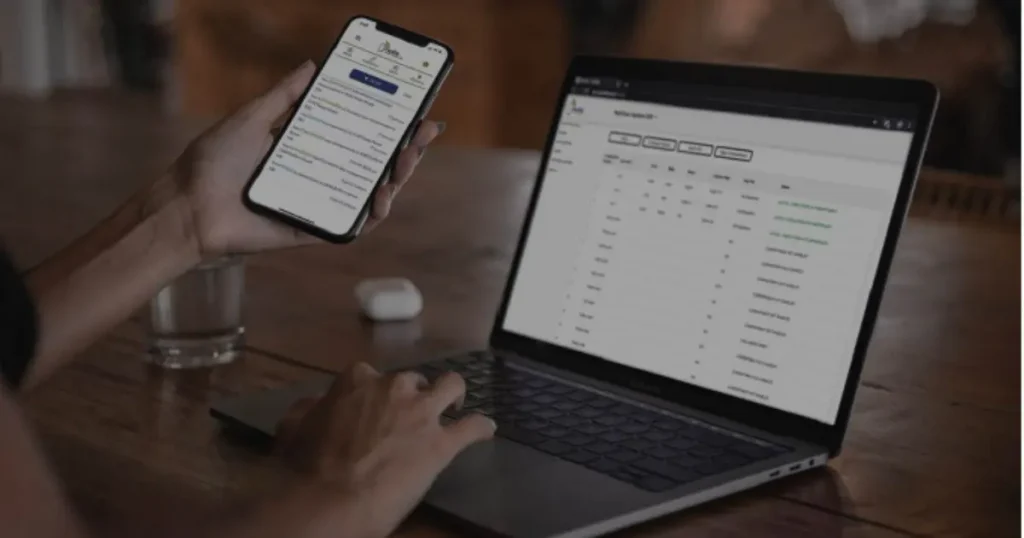
- Monitor. Every transaction is logged with a timestamp and user details. All transactions are automatically logged with precise timestamps and user details. A live dashboard displays current key statuses while instantly alerting you to key returns and overdue items.
- End access. When the job or contract ends, access can be removed remotely.
Each step answers a question the sign-out sheet leaves open: who has access, for how long, and when it ends.
Sign-Out Sheet, Key Drop Box or Noki Exchange
When evaluating your approach to condo key management, each of these three common systems offers a distinct level of building oversight:
| QUESTION | SIGN-OUT SHEET | KEY DROP-BOX OR LOCKBOX | NOKI EXCHANGE |
|---|---|---|---|
| Does it record who took the key? | Only if someone fills it in | Often a shared code – no name | Yes. Every transaction is logged with a timestamp and user details |
| Does it limit each person to approved keys? | No | Usually one code per box | Yes. Only authorized users can retrieve assigned keys |
| Can access be limited to a set time? | No | Depends on the model | Yes. Access can be granted for specific dates and times |
| Is the manager notified of returns, overdue keys and unauthorized attempts? | No | Depends on the model | Yes |
| Does it need staff present to hand over a key? | Yes | No | No |
| How do you end a contractor’s access? | Ask for the key back | Change the code | Access expires at the agreed time or can be revoked remotely |
A Condo Key Management Checklist for Property Managers and Boards
Technology only helps when the rules behind it are clear. Agree on these points before changing any system.
☐ Decide who in your building can grant key access through the app, and put it in writing.
☐ Set how long a key may be out: same day, overnight, or the length of the job.
☐ Limit each contractor to the keys the job needs. Keep master keys out of contractor hands.
☐ Tie every checkout to a named person, not just a company.
☐ Decide who receives the overdue alert when a key is not returned on time, and what happens next.
☐ Set out what happens when a key is lost: who is told, and who decides on re-keying.
☐ Review the key log on a regular schedule and report to the board.
☐ Remove access on the day a contract ends.
How Noki Exchange Fits a Condo Building
Modern condo key management requires complete visibility into who holds building keys, which doors they access, and when those keys return. Noki Exchange holds keys in locked compartments inside the building. The unit is installed in a lobby, vestibule or other common area where users can access it, and the system controls who can open each compartment.
- Flexible authentication. RFID cards, unique PIN codes, or mobile access through the smartphone app. Anyone with the app can also grant others access for specific dates and times, and authorized users receive a secure passcode.
- Automated logs and reporting. Every key transaction is logged with timestamps, user details and retrieval history, so you can see who accessed which key and when.
- Real-time monitoring. Check key status in real time and receive instant notifications for key returns, overdue keys and unauthorized attempts.
- Remote permissions. Change who can take which key without being on site.
- 24/7 key access. Employees, tenants and service personnel can retrieve keys at any hour, while only authorized individuals can open assigned compartments.
- Built for busy buildings. Heavy-duty, tamper-proof steel, AC power with battery backup, and Wi-Fi and Ethernet connectivity. Units hold 10, 20 or 50+ keys.
To see how this works for realtor showings, read our realtor lockbox alternative guide.
Know Who Holds Your Keys
Ask your team three questions:
- Can you say right now which contractors, realtors and vendors hold keys to your building?
- How long can a key stay out before someone notices?
- If a contractor’s contract ended today, how would you remove their access?
If any answer is uncertain, your condo key management process is worth a closer look. We’ll review how your building handles keys today and show what a controlled process looks like.
Frequently Asked Questions
What is the best approach to condo key management for contractors, realtors and vendors?
Tie each key to a named person and a defined job, record every checkout and return, and remove access when the job ends.
Should contractors ever hold master keys?
In most cases, no. Limit each contractor to the specific keys the job needs. Your board can set this as a written policy.
What happens if a contractor loses a key?
A record of who held the key and when lets the manager judge the risk and decide whether re-keying is needed, instead of guessing.
Does Noki Exchange replace a fob or door access system?
No. A fob system controls entry through doors. Noki Exchange controls how physical keys are stored and handed off. Many buildings use both. See our guide to key fob entry systems.
How do contractors and vendors get access?
An authorized user grants access through the app or Noki Exchange dashboard for specific dates and times. The visitor receives a secure passcode to retrieve and return the key.
Does Noki Exchange work for realtors and showings?
Yes. Keys remain locked in assigned compartments inside the building, and each user receives an individual passcode valid only during their approved showing window. Read our complete realtor lockbox alternative guide to see how modern buildings eliminate lockbox clutter.