

For the better part of five years, Canadian rental operators didn’t have to work especially hard to fill units. Vacancy hovered near zero, rents climbed year after year, and demand from immigration consistently absorbed whatever new supply came online. The market did the work.
That era is over. In 2025, Canada delivered more than 94,000 new rental units across its major markets. Vacancy rose to 4.3% — the highest since tracking began. Rents fell in Toronto, Vancouver, and Montreal. And for the first time in years, residents are in a position to compare, negotiate, and choose.
For property managers and condo operators, that shift creates a genuine problem — and a genuine opportunity. The buildings that use this window to differentiate on operations, reliability, and resident experience will not only survive the transition. They’ll come out of it with stronger occupancy, better renewal rates, and residents who aren’t looking to leave.
The Market, By the Numbers
The scale of Canada’s supply surge is worth understanding clearly before drawing conclusions about what it means for individual buildings.
CANADIAN RENTAL MARKET — KEY INDICATORS 2025 / Q4 2025
| M E T R I C | M A R K E T | F I G U R E | D I R E C T I O N |
| National Vacancy Rate | Canada | 4.3% | Highest since 2020 |
| New Lease Rent Growth | Canada | 0.7% | Down from 2.4% prior quarter |
| Year-over-Year Rent Change | Toronto | -3.9% | Declining |
| Year-over-Year Rent Change | Vancouver | -5.9% | Declining |
| Year-over-Year Rent Change | Saskatoon | +6.0% | Rising |
| Annual Turnover Rate | Canada (2bed) | 23.9% | Elevated |
| Purpose-Built Units Delivered | Canada (2025) | 64,000+ | New supply |
| Condo Units Entering Rental Pool | Canada (2025) | ~44,000 | Investor-owned |
Sources: Yardi Canadian National Multifamily Report Q4 2025 · CMHC 2025 Rental Market Report · Valery.ca
The picture is unambiguous: supply has outpaced demand in every major market except the Prairies. Renters have more choice. Leaseup timelines are longer. And the buildings that were previously insulated by tight market conditions are now exposed to real competition — often from newer product in the same neighbourhood.
“Differentiation is critical. Professional management practices and the use of technology for tenant engagement are becoming defining factors in maintaining high occupancy rates.” TENANTPAY — CANADIAN RENTAL MARKET FORECAST 2025
| You Can Also Read : What Great Property Managers are Doing Differently |
What Residents Are Actually Comparing

When a resident has three comparable buildings to choose from, rent is not the only variable. In a softening market, residents evaluate the full picture — and the operational details that were previously invisible start to matter.
| WHAT RESIDENTS EVALUATE | BUILDINGS WITHOUT SYSTEMS | BUILDINGS WITH PROPER SYSTEMS |
| Key & Access Control | Paper logs, hook boards, no audit trail | Digital key management, full tracking, instant deactivation |
| Maintenance Response | Staff scrambling, unclear escalation path | Credentialed access, logged entries, no delays on first visit |
| Package & Parcel Management | Lobby piles, no notification, theft risk | Smart lockers, instant alerts, 24/7 secure retrieval |
| Contractor Access | Master key borrowed, no record of who entered | Time-limited credentials, entry logged, auto-expired |
| Overall Impression | Building feels reactive and disorganized | Building feels managed, secure, intentional |
None of these comparisons happen in a formal review. They happen in three-second moments — a resident watching staff look for a key in the hallway, noticing that the package corner is overflowing again, or realizing that nobody seemed to know the contractor had been on their floor. These observations build quietly. They surface at renewal time.
Where Key Management Fits Into This Picture
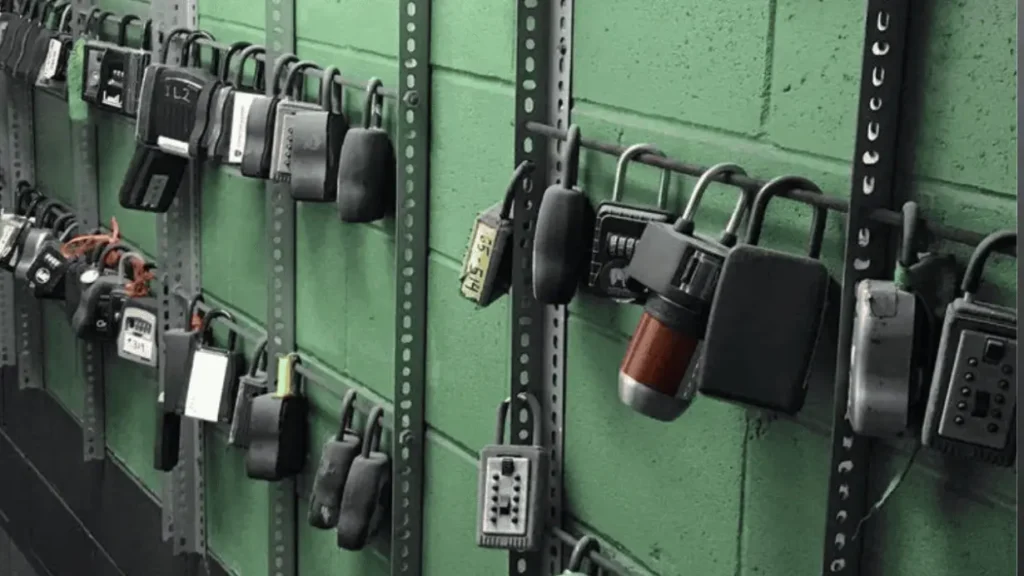
Of the operational gaps that residents notice, key and access management is among the most overlooked by building operators — and among the most visible to residents. In a 200-unit Toronto or Vancouver high-rise, physical keys are touching dozens of interactions every day: maintenance rounds, contractor visits, afterhours access, unit turnovers, common area inspections.
Without a proper key management system, every one of those interactions carries uncertainty. Who has the key right now? Was it returned? Which contractor took it yesterday, and did it come back? In a tighter market, that uncertainty was acceptable because residents had nowhere else to go. In today’s market, it’s a liability.
23.9%
Annual turnover rate for two-bedroom units across Canada — Q4 2025.
Nearly one in four units turns over every year. Without a key management system, every single one of those turnovers creates a rekeying cost, an access gap, and a period of operational uncertainty during the most visible transition in a resident’s tenancy.
A key management system doesn’t eliminate turnover. But it removes the operational friction that turnover creates — instant deactivation of departing resident credentials, clean handoff for incoming residents, and a complete audit trail that protects the building from liability at every stage.
How to Actually Stand Out in 2026
Standing out in a competitive market doesn’t require a renovation budget or a new amenity program. It requires closing the operational gaps that residents notice — and that most buildings are still ignoring.
| OPERATIONAL AREA | WHAT MOST BUILDINGS DO | WHAT STANDING OUT LOOKS LIKE | PRIORITY |
| Key Management | Hook boards, paper logs, manual signout sheets | Digital key cabinet with RFID access, real-time tracking, auto-alerts for unreturned keys | HIGH |
| Parcel Management | Lobby corner, no notifications, staff handling | Smart locker system — carrier-agnostic, 24/7 access, instant resident notification | HIGH |
| Contractor Access | Master key lent out, no record kept | Time-limited credentials, logged entry, auto-expiry — visible to management in real time | HIGH |
| Maintenance Response | Reactive — ticket submitted, timeline unclear | Credentialed access logs prove when issues were addressed and by whom | MEDIUM |
THE RETENTION EQUATION: CMHC’s 2025 report confirms that landlords in competitive markets are offering incentives — free rent months, waived deposits, parking discounts — to fill vacancies. A building that retains residents through operational quality doesn’t need incentives. The cost of a key management system is a fraction of one month’s free rent on a single unit, let alone the carrying cost of vacancy.
The Window Won’t Stay Open Indefinitely
Canada’s supply surge won’t last forever. CMHC projects that construction starts will slow by 2026–2027 as developers respond to higher vacancy and compressed margins. When demand eventually rebounds — and in Canada’s major cities, it will — the market will tighten again.
The buildings that use this period to build operational credibility will be in the strongest position when competition eases. The buildings that coast will simply have a larger gap to close.
Standing out in a market with 94,000 new units doesn’t require matching their finishes or undercutting their rent. It requires being the building that residents trust — where systems work, where access is controlled, and where the daily experience of living there reinforces the decision to stay.
Noki Systems- Built For Canadian Multi Residential
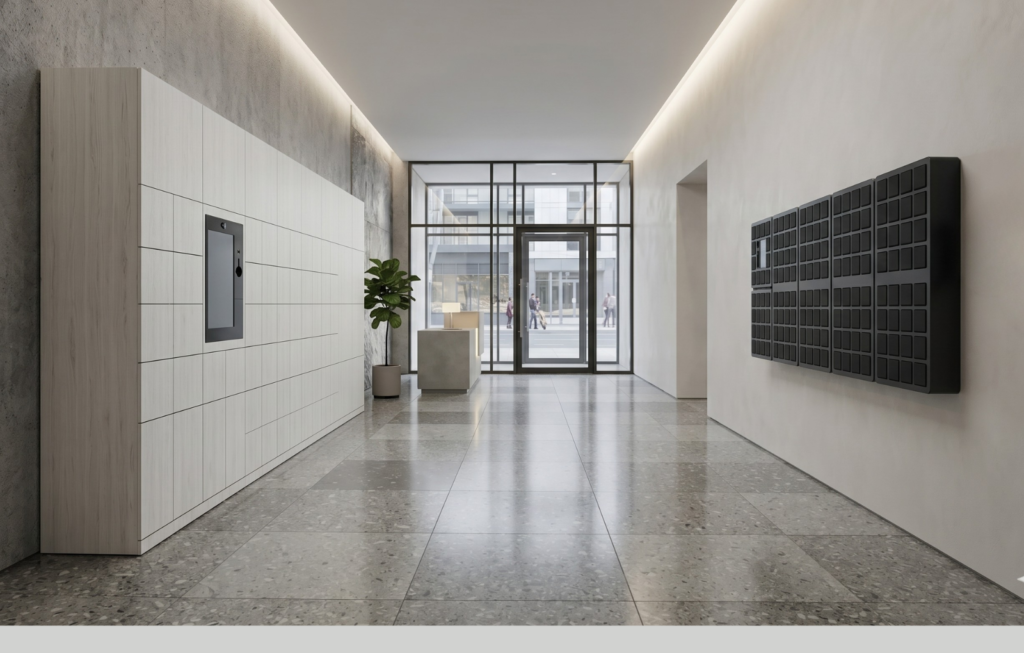
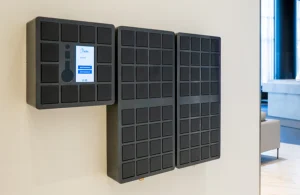
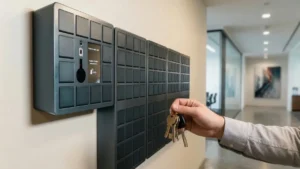
Noki’s key management systems and smart lockers are deployed across condos, purpose-built rentals, and mixed-use developments across Canada. Electronic key cabinets with RFID, biometric, PIN, and mobile access — fully logged, centrally managed, and built to close the operational gaps that cost Canadian buildings residents every renewal cycle.
Your Window Is Open.
Use It.
See How Noki Helps Canadian Property Managers Build the Operational Advantage that Retains Residents.
Book a Free Demo I Key Management Systems I Smart Lockers I Talk to Our Team